
A yellowed clear case and your paper insert
Short answer: clear cases yellow because UV light, heat, and skin oils break down the plastic, and the change happens inside the material, so cleaning cannot reverse it. A yellowed case tints whatever is behind it, so a white or pastel insert looks warmer. Choose a darker or more colourful design, or replace the case; the case, not the insert, is what changes.
Choosing a new case? Read clear phone cases that don’t yellow first: it is our main guide to what owners report and what makers promise.
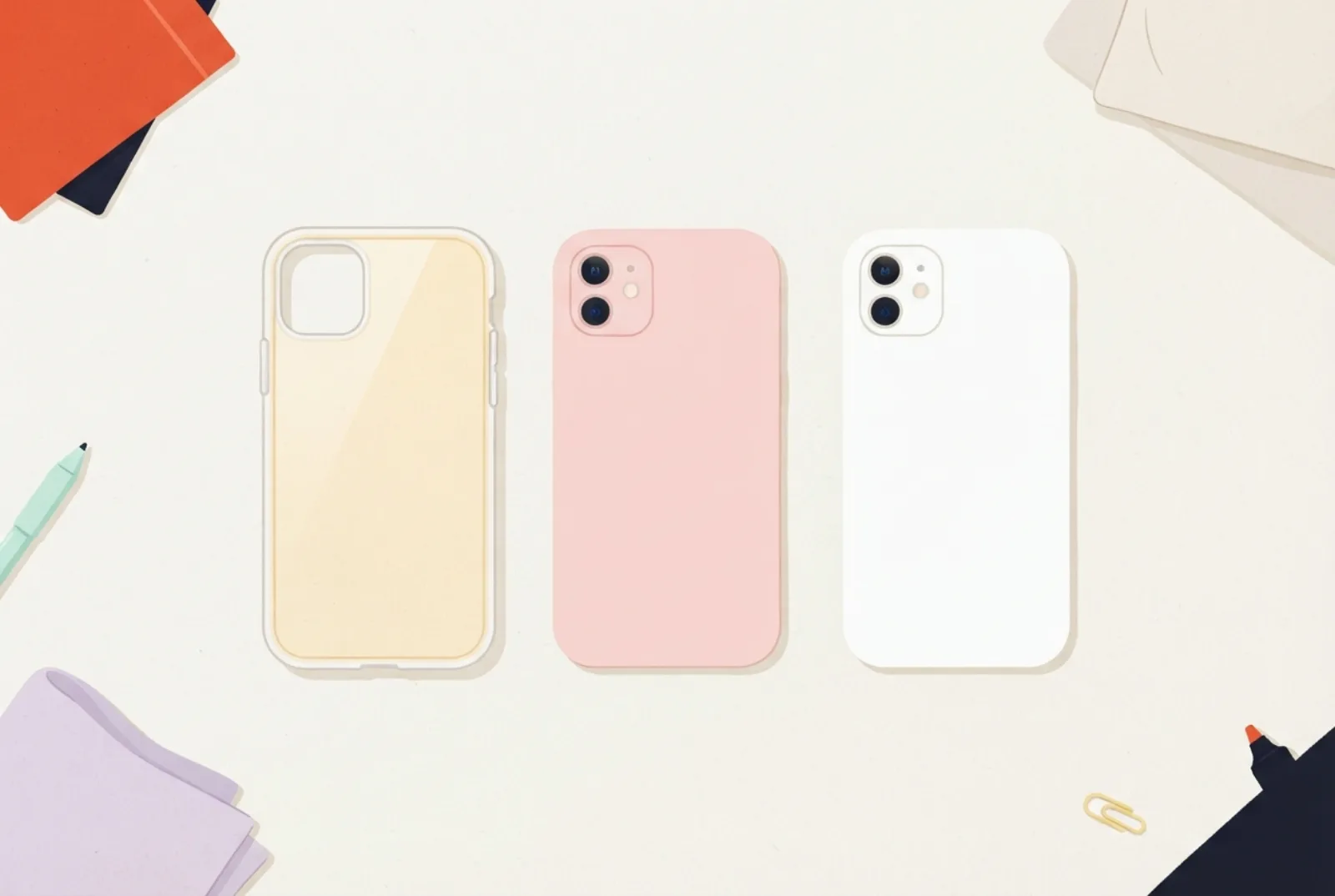
- Yellowing is caused by UV light and heat acting on the plastic, with skin oils and some cleaners adding to it.
- It cannot be cleaned off, because the colour change is inside the material.
- Light inserts show it most. Strong colours and darker designs hide it.
- Polycarbonate backs resist yellowing better than TPU, according to case makers’ own guides.
Why clear cases turn yellow
Two case makers explain it in similar terms. ZAGG says clear cases yellow because of UV light, heat from the sun or the phone, and sweat and skin oils that build up on the case, and that TPU and silicone yellow faster than some alternatives. (ZAGG.) Benks says UV light breaks down the TPU polymer and creates yellow-tinted molecules inside the plastic, that softeners in the TPU migrate to the surface and add to the tint, and that heat, tight pockets and alcohol-based cleaners speed it up. (Benks.) Both are case sellers, so treat their descriptions as the industry’s own explanation rather than independent testing.
How fast does it happen?
It depends on the material, the light and the heat. Benks gives these rough timelines for visible yellowing, and says…
Polycarbonate resists UV better than TPU, so many cases use a polycarbonate back panel with TPU bumpers, according to the same article. That is why a case with a hard clear back often stays clearer than a fully soft one.
What a yellowed case does to an insert
An insert is opaque paper, so the colour of the phone does not matter, but the clear back of the case sits in front of the insert. If that back has a yellow tint, everything behind it looks slightly warmer: a white insert looks cream, a pastel pink looks peachy, a light blue looks greenish. Strong and dark colours hide it. The case does not change the paper, though strong light can fade prints over time (see the paper guide).
| Insert colour | Effect of a yellowed case | What to do |
|---|---|---|
| White or cream | Looks warmer, more cream or beige | Switch to a design with stronger colour, or replace the case |
| Pastel pink, blue, mint | Shifts toward peach, green, lime | Pick pastels that suit a warm tint (peach, butter yellow) |
| Bold or dark colours | Barely noticeable | Nothing: these hide the tint |
| Black-and-white photos | Whites look beige | Add a slight cool tone in the maker, or use a colour photo |
Is it the case or the insert?
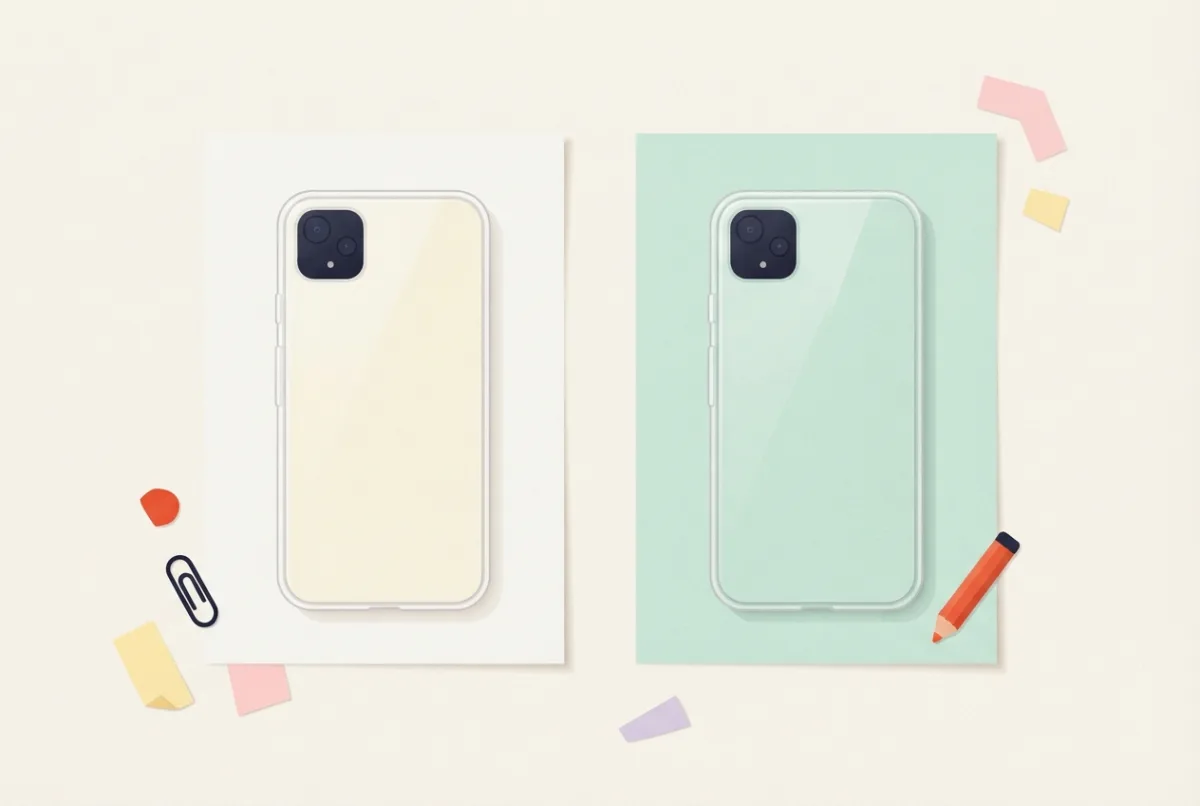
- Take the insert out and hold the empty case against a sheet of white paper. A clear case that looks tinted against white is yellowed.
- Compare with a new clear case if you have one.
- Hold the insert next to a fresh sheet of the same paper. If the insert itself has faded or changed, it is the paper, not the case; see the paper guide for fading advice.
Can you reverse it?
Not really. Benks says the yellowing is inside the material, so cleaning only removes surface grime, not the UV-driven tint. ZAGG says cleaning with mild dish soap, water, baking soda and a microfibre cloth may partly restore a case, and that one that stays yellow after cleaning should be replaced because of ageing. ZAGG’s FAQ also suggests a small amount of alcohol on a cloth, while Benks says alcohol-based cleaners can speed yellowing up, so the sources disagree; avoiding alcohol is the cautious choice.
Causes at a glance, and what you can control
ZAGG’s explainer lists five causes. The right-hand column is our reading of which ones you can influence. (ZAGG.)
| Cause (ZAGG) | What it means | Can you control it? |
|---|---|---|
| UV light | Sunlight breaks down molecules in the plastic | Yes: keep the phone out of direct sun |
| Heat | Charging, demanding apps and sun raise the case’s temperature | Partly: avoid hot places |
| Sweat and skin oils | Oils build up and sweat can degrade plastics | Yes: clean the case regularly |
| Material quality | Cheaper plastic yellows faster | At the time of purchase |
| Built-in tint | Clear polymers have a yellow undertone that makers offset with a little blue dye; it can degrade with age | No |
Wikipedia’s article on thermoplastic polyurethane (TPU) says TPU is a popular material for flexible phone cases, and that where stable light colour and non-yellowing performance are required, aliphatic TPU is used. (Wikipedia: Thermoplastic polyurethane.) That may explain why some cases are sold as “anti-yellowing”, but a case’s listing rarely says which grade of TPU it uses, so treat the claim as a marketing line unless the maker gives a test.
The white-paper test
You can judge how yellow your case is in two minutes. This is our own method, not a standard test.
- Take the phone out and lay the empty case on a plain white sheet of paper, in daylight.
- Compare the paper seen through the case with a piece of the same paper beside it.
- If the paper behind the case looks cream or yellow, the case has tinted.
- Repeat with a light blue sheet and a pale pink sheet: a tint you can ignore on blue may look worse on white.
Do it with a new case as well, if you have one, so you know what “clear” looked like.
Which insert colours hide a tint?
A yellow tint over a white insert looks cream; over a pale blue, it can look slightly green. These are our expectations from how colours mix, not tests of particular cases, so check on your own case with the paper test above.
| Insert colour | With a yellow tint | Our advice |
|---|---|---|
| White or very pale grey | Looks cream or yellowish | Most visible; consider another colour |
| Pale blue or lilac | May shift toward green or grey | Test first |
| Pink or peach | Warmer; usually stays pleasant | Often a good match |
| Yellow, orange or red | Hard to notice | Good choice for an old case |
| Dark colours | Tint is hard to see | Hides it well |
A careful cleaning routine
ZAGG’s steps, which the brand says may partly restore a case, are below. Benks warns against alcohol-based cleaners, so we leave that step out.
- Wipe the case with a household wipe, or use mild dish soap, water and a microfibre cloth.
- For stubborn yellowing, sprinkle a little baking soda on a moistened microfibre cloth and wipe the case.
- Rinse and dry fully before the insert goes back in.
- If the case stays yellow after several attempts, ZAGG says it may be time to replace it because of natural ageing.
How to slow it down
- Keep the phone out of direct sun and hot places, including in direct sun and other hot places.
- Clean the case regularly with a mild soap and a soft cloth, to remove skin oils and sweat.
- Avoid alcohol-based cleaners (Benks warns against them; ZAGG’s advice differs).
- Choose a case with a polycarbonate back or a named anti-yellowing technology and clear specifications. Our guide to clear cases that don’t yellow compares what Reddit owners say with what makers promise.
Questions
Will the insert yellow too?
Paper behind a case does not yellow because of the case. Direct strong light can fade printed colours over time. See the paper guide.
Does a yellowed case damage my phone?
It only changes the look. It only changes the look. If the case is cracked or loose, replace it.
Does a colourful insert fix a yellowed case?
It hides the tint well if the colours are strong. White and pastel designs show it most.
Which clear case yellows least?
According to Benks’ own timeline, polycarbonate with an anti-UV coating lasts longest. We have not tested individual cases.
Do “anti-yellowing” cases really stay clear?
Some may last longer, but we have not tested any. Wikipedia notes that aliphatic TPU is the grade used where non-yellowing performance is needed, and the brands we read give their own timelines. Compare cases by the material and the maker’s claim, and expect a tint eventually.
How often should I replace a clear case?
When it looks tinted enough to bother you, or is cracked or loose. Standard TPU may start to tint within months, according to one maker’s estimate.
Sources
- ZAGG: Why does your clear phone case turn yellow? (causes, partial reversibility, prevention).
- Wikipedia: Thermoplastic polyurethane (popular phone-case material; aliphatic TPU for non-yellowing uses).
- Benks: Clear phone cases turning yellow, here’s why (UV breakdown of TPU, material timelines, cleaners).
Find the template for your phone
Every guide works best with a true-size template for your exact model: iPhone templates, Samsung Galaxy templates, Google Pixel templates, iPad templates, or all phone models. Then open the insert maker to print it.
More guides
Printable vs bought phone case inserts
Free printable or bought insert: price, fit and quality.
Phone case template: paper insert, sublimation or mockup?
Three kinds of phone case template and which one you need.
iPhone size comparison: 34 models, 7 drawn to scale
iPhone sizes from the X to the 17 Pro Max, with seven drawn to scale.